| rosanista.com | ||
| Simplified Scientific Christianity |
The nineteenth century in Europe was a philosophical age, in which many of the great creative minds turned to the ancient world for the great mystic truths which, immortal in the human soul, are continually re-embodied in works of art. Such a mind was Richard Wagner, who loved philosophy with the deep ardor of the mystic, and who sought to show it forth among men in an art form supremely beautiful. He has left many records which show the unfolding of the Mystery Wisdom in his heart and mind; but even without his own written testimony, his music-dramas tell the story in language which cannot be misunderstood by any one who know the basic principles involved.
It was his dream that every performance of Parsifal, which was the culminating work of his life and the supreme love of his heart, should be, as it were, an initiatory experience to all who witnessed it; and for this reason he said that it should never be produced outside of Beyreuth, where it could be suitably housed and shown, ensphered in an atmosphere of profound reverence and wonder. Despite his command, Parsifal has been shown in many places in the world since his passing; and while there can be no question but that something is lost to these performances which only Beyreuth can give, still its wondrous mysteries penetrate to the core of every heart and awaken there the holy living ardor of the Grail Itself, with deepening concepts of self-dedication to the higher life.
The writer once spent four years in New York City and one of the high spiritual lights of each one of these four years was the Good Friday performance of Parsifal at the Metropolitan Opera House.
Wagner's Parsifal tells the story of the Grail hero of Chretien de Troyes and Wolfram von Eschenbach, and although these two ancient troubadours were not at one in their views on the Holy Grail, yet they are the unquestioned authorities to whom all later writers have turned for instruction and illumination. Wagner wrote the libretto for Parsifal in 1871, two years after Tennyson had retold the story of Galahad at length in English in his Idylls of the King. The music was composed in 1878, and 1879, and the opera was first performed at Beyreuth in 1882, with Wagner himself on the conductor's stand. We may comment in passing that these librettos which Wagner wrote stand preeminent in German poetry; and even if he had not become more famous as the composer of operas, his fame as a poet would still have been assured from the poetry he wrote for those operas.
We have said before, many times, in writing of Wagner's operas, that Wagner's music in the Grail epics, Lohengrin and Parsifal are transcriptions of angelic melodies such as the mystic hears with spiritual hearing; and concerning which Burne-Jones, the English artist who painted many pictures of Grail subjects, wrote in 1884: "I heard Wagner's Parsifal the other day... He made sounds that are really and truly (I assure you, and I ought to know) the very sounds that were to be heard in the San Graal chapel."
Richard Wagner's music has gained world-wide popularity since those first momentous years when it was attacked on every side; but even today, there are comparatively few who fully appreciate or comprehend the exalted spiritual truths which he has hidden within the dramatic situations and given sound to in the music patterns. This is pure New Age music. When Initiation is again the center of all spiritual work, and when Wagner's music has come into its own, it will be part of the initiatory work of the New Day.
In occultism it is known that there are seven major centers in the body, and many other centers attendant upon these, which are responsive to musical vibrations. In ancient times, the sacred chants played upon these force centers — the music of masses and chorales served to stir them from their sleep — but in modern times there are many who could no longer respond to the ancient modes. Something new was required — to vibrate with the soul of the epoch, and this Wagner's music has provided.
Each one of the characters in the music drama is symbolic of a state or stage of spiritual unfoldment in the individual; representing definite qualities or powers. This is described in the musical motif which always attends the appearance of this character on stage, and which may also speak of him in his absence. To the spiritual vision this motif is an aura of light and color which surrounds the character it represents.
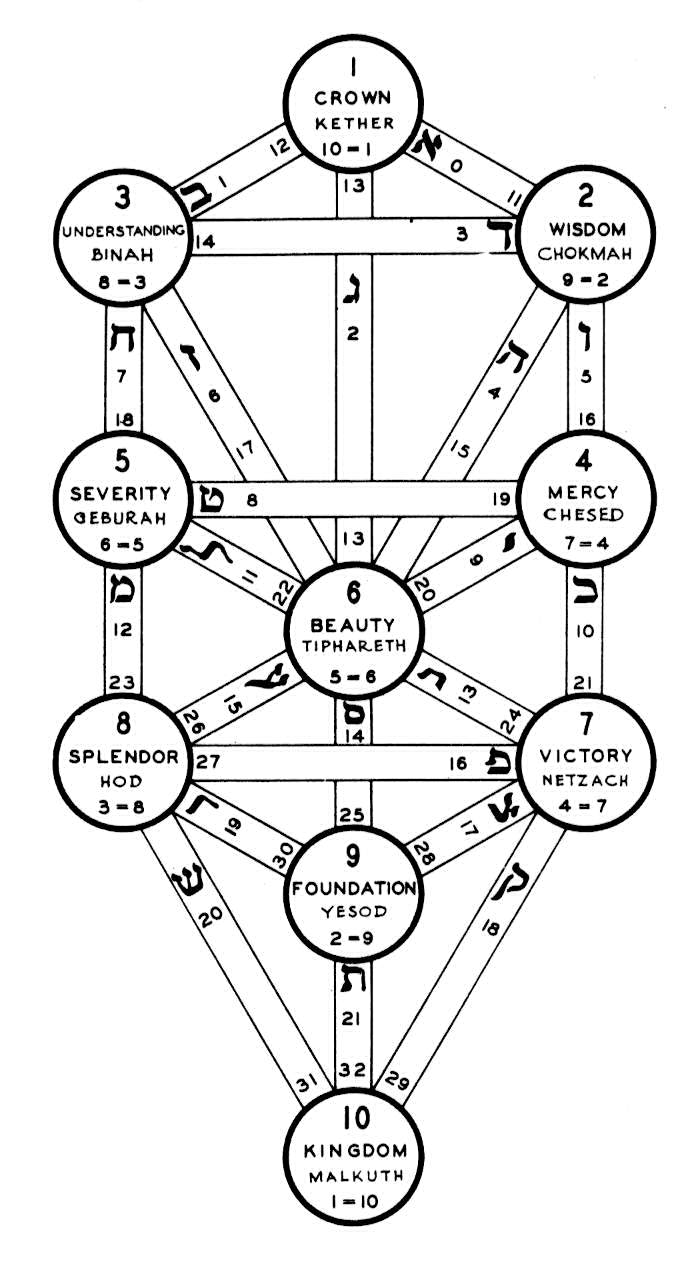
The first of the major centers to be awakened, after the aspirant has lived the life of purity and harmlessness for a suitable period of time, is the chakra, or blossom, at the root of the spine, where the spirit-fire sleeps. The awakening of this fire and its ascent up the spine toward the organs in the head results in the stimulation of the other six centers, which are also largely dormant. Hence ancient teachers often referred to the spinal canal as "the Path of Initiation."
Parsifal is the type of aspirant who has gone far on the Path in former incarnations and is now ready to ascend the high passes of the Mount of the Holy Grail, becoming the Initiate.
The Parsifal motif plays directly upon the several chakras or force centers of the etheric body, vibrating each one singly and together, in harmonious spiritual unfoldment. Parsifal's Initiation, however, since it applies to the modern world, shows variations from that of the ancients.
The solar plexus was the center most commonly awakened through the pre-Christian Initiation. Since it is the center of life forces which can be used for evil as well as for good, it, like the lowest or sacral center, had to be "conquered" and brought under the control of the will. The solar plexus could become the gateway for the lowest and most sinister forms of psychism if the will were not firmly pointed toward the Most High. Upon this center plays the motif of Amfortas, who was originally a noble aspirant but one who lost his high place through the seduction of the beautiful maiden Kundry. However, before his death he becomes re generated through the powers of the Holy Grail and the Holy Spear which Parsifal wields.
The force center in the spleen is the source of the renewal of vitality. When it is fully awake and under the control of the illumined will, man is able to flood his entire body with the life forces which pour in from the sun and from outer space. Eventually, old age and even death itself will be no more. It is the motif descriptive of the holy Titurel which impinges upon the force center of the spleen. Titurel was formerly the head of the Grail Castle and teacher of its Knights, until he relinquished his power to his son, Amfortas. This holy man had bridged the chasm between waking and sleeping, between life and death. He was in full possession of his faculties both night and day, and also between death and rebirth. Since Amfortas had failed in his guardianship of the Grail, Titurel remained in the background of the work until Amfortas' successor should come. By means of first-hand experience he had come into the knowledge that all life is continuous and all life is one.
The heart center is connected with the most exalted phases of transmutation. Its musical motif is that of Kundry, who is the symbol of transmutation in the Parsifal legends. She tempts the knights, and if they fall prey to her temptations, they are lost to the Path. But if, like Parsifal, they stand firm, then she becomes the servitor of the Initiate, leading him to the Castle of Light, where she dies on the steps of the altar, her sacrifice made perfect in the perfect knight whom she has served, who stands illumined and transformed by the powers of the Grail.
The white and glittering beauty of the Lance motif plays upon the force center in the throat. The Lance motif symbolizes the power of Truth in manifestation, and it is truth that always manifests in the power of the Creative Word.
The motifs of the Eucharist and Grail are direct transcriptions of pure angelic music, and they play immediately upon the pituitary and pineal glands respectively, which are located in the head.
To the clairvoyant vision, the spinal spirit-fire, as it is awakened at the base of the spine and ascends through the spinal canal, forms as it were the likeness of the stem of a flower, its light reaching forth in petals of radiant color to the organs of the physical body which are the foci of their powers. Thus the base of each lily-like flower intersects the spine, and as the blossom continues to unfold, its light reaches to the uttermost limits of the aura; then farther and farther, until in the Transcendent Master they are lost in the depths of spiritual space.
There is an etheric organ, little mentioned in occult literature, which is built from the life substance as it rises from the throat center up into the head. It has the shape of a lily-cup, whose corolla shines within the skull, embracing the organs of spiritual vision which are there and sending its light outward to radiate halo-like about the head. This etheric structure is a true organ, though it has as yet no physical counterpart, and it is the destined instrument which will enable perfected man to speak the Creative Word, whose sound verily has the power to create and recreate matter in all its forms.
The Mystery of the Grail is the Mystery of Sound and Light. Parsifal learned to use these powers rightly, but only after suffering and sorrow. He asked the right question, the why and wherefore of evil and suffering on earth (Why does Amfortas suffer?), and in learning the answer to this question he became the King of the Holy Grail, joined with Christ in the work of salvation. He knows who and what the Grail is.
In orthodox theology that aspect of Godhead which imparts celestial virtues or graces to the human soul is called the Holy Ghost or Holy Spirit, and for this reason medieval poets have called the Castle of the Grail "the House of the Holy Spirit."
Thus the old legend shows that the New Age man figured in Parsifal will build the Grail Cup within himself and that the Castle which houses it is the body, which is indeed the Temple of the Grail and House of the Holy Spirit.
The Holy Grail and the Mystic Love Feast (the Eucharist) are inseparable. There can be no Love Feast without the Grail. The Love Feast has been the nucleus of Temple Mysteries since the beginning of time, and this is the theme of the immortal Grail and Eucharist motif in Parsifal.
In the Temple scene the Grail is exposed, the Knights kneel in prayer. Suddenly the Grail glows· with rubescent life, and angels sing in ecstasy. What has happened? It is the spiritual force which the knights have generated within themselves by means of prayer that goes forth to bless the world and which causes the Cup to glow. This power is the same as that which the early Christian Initiates poured into the Bread and Wine of the Mystic Repast, and which became the medicine of health and wholeness to all who suffered. Today in all genuine Mystery Schools a like Mystic Supper is celebrated at about the hour of sundown, and in the Temples at midnight. The prayers which are poured forth to a center are gathered up and sent out to the world for help and healing. The "charged Bread and Wine" are today as of yore the Panacea or Elixer sought by the spiritual alchemist.
Those who are able to do this work are the most exalted of human souls. It is for those of the innermost circle. In the Chemical Marriage of Christian Rosenkreuz we are shown a chamber in which a globe hangs centrally, and upon this globe beats the light from suns which shine upon it from every side. What are these suns but the radiant auras of the presiding Initiates, who are thus bringing to a focus on the globe the high powers of Him who is the Grail? And what is that globe but the earth itself?
The Sacred Spear and the Grail figure in the Mystic Repast together, as they were together on Golgotha. Before Parsifal can heal Amfortas, the point of the Spear must glow as the Cup glows. The Spear represents the spinal spirit fire which, when lifted to the head, touched with fire the pineal gland and pituitary body. In the lily cup which then shines forth, the Essence, the Panacea, is found, which heals the world and all the ills of mankind. This is the key to all so-called "magnetic" healing and all healing by prayer.
The evil Klingsor could not use the Sacred Spear; he had not its power. But in the hands of Parsifal it could dissolve the evil garden created by Klingsor's dark magic.
Melchizedek, the title of a succession of Atlantean High Priests, gave this secret of high magic to Abraham, as shown in the Old Testament, where he celebrated with Abraham the Mystic Supper in which also he conferred upon Abraham the High Priesthood of the then New Dispensation of the Fifth Epoch and Post-Atlantean Age.
Christ Jesus, the supreme World Teacher, transmitted the Teaching to His disciples as the culmination of His earthly mission. Its true meaning has been all but forgotten, but in the Aquarian Age it will be revived in all its mystic potency.
Only "the Few" now comprehend its deep inner import. Yet with or without knowledge, no observance of the Eucharist in Christ's Name is ever unattended by a tremendous downpouring of the angelic power, and always there is the angelic choir chanting, "Love grows cold without the observance of the Mystic Love Feast."
— Corinne Heline
|

|
|
|
|
Contemporary Mystic Christianity |
|
This web page has been edited and/or excerpted from reference material, has been modified from its original version, and is in conformance with the web host's Members Terms & Conditions. This website is offered to the public by students of The Rosicrucian Teachings, and has no official affiliation with any organization. | Mobile Version | |
|